
Last month, Sarah from Manchester got her payslip: £2,400 gross. After tax: £1,950. Her rent? £1,100. That’s 56% of her take-home pay – gone before she even bought groceries.
She’s not alone. Across the UK, renters now spend an average of 43% of their salary on rent. In London? It’s 52%. In Brighton? 48%. In Edinburgh? 44%.
This is the UK rent trap – and it’s getting worse. In 2026, rents jumped 15.2% while wages grew just 4.1%. The math doesn’t add up.
But here’s the good news: there ARE ways out. In this guide, I’ll show you exactly how much renters pay in YOUR city, why it’s so expensive, and 7 proven strategies to escape.
📋 Table of Contents
- The Brutal Reality: How Much of Your Salary Goes to Rent?
- UK Rent Crisis 2026: The Shocking Data by City
- Why UK Rents Are So High (It’s Not Just Greed)
- The 50% Salary Trap: What Happens When Rent Eats Everything?
- 7 Ways to Escape the UK Rent Trap (Tested in 2026)
- The “Rent Hacking” Strategy: Legal Ways to Pay Less
- Should You Move Out of London? (City Comparison)
- Renting vs. Buying: Which Is Actually Cheaper in 2026?
- Government Support: What Help Is Actually Available?
- Your Action Plan: Reduce Rent Burden by 20% This Year
- Frequently Asked Questions
The Brutal Reality: How Much of Your Salary Goes to Rent?

Let’s start with the numbers that will make you want to scream.
National Average (2026):
- Renters spend 43% of gross salary on rent
- In 2020, it was 31%
- That’s a 38% increase in just 6 years
What’s “Affordable”? Housing experts say rent should be 30% or less of your income. By that standard:
- 78% of UK renters are in unaffordable housing
- 91% of London renters are in unaffordable housing
- Only 22% of UK renters meet the “affordable” standard
The Monthly Breakdown: If you earn £30,000/year (£2,500/month gross, ~£2,083 after tax):
- Affordable rent (30%): £625/month
- Actual average rent: £896/month
- Shortfall: £271/month = £3,252/year
That’s £3,252 you DON’T have for savings, emergencies, or actually living.
UK Rent Crisis 2026: The Shocking Data by City

Here’s where it gets brutal. Let’s break it down city by city:
| City | Avg Rent (1-bed) | Avg Salary | % of Gross Salary | % of Net Salary |
|---|---|---|---|---|
| London | £2,100 | £48,000 | 52% | 62% |
| Brighton | £1,450 | £36,000 | 48% | 58% |
| Edinburgh | £1,200 | £32,400 | 44% | 53% |
| Bristol | £1,150 | £33,600 | 41% | 49% |
| Manchester | £1,100 | £31,200 | 42% | 51% |
| Birmingham | £950 | £29,400 | 39% | 47% |
| Leeds | £850 | £28,800 | 35% | 42% |
| Liverpool | £750 | £27,600 | 33% | 39% |
| Glasgow | £700 | £28,200 | 30% | 36% |
| Sheffield | £650 | £27,000 | 29% | 35% |
Key Takeaways:
- London is in a league of its own – 52% of gross salary is INSANE
- Brighton & Edinburgh aren’t much better
- Northern cities (Liverpool, Sheffield, Glasgow) are still “affordable” by technical definition
- The North-South divide is real: Southern renters pay 40% more
Year-on-Year Increases (2025-2026):
- London: +12.8%
- Manchester: +18.4%
- Birmingham: +16.2%
- Liverpool: +14.7%
- National average: +15.2%
Why UK Rents Are So High (It’s Not Just Greed)
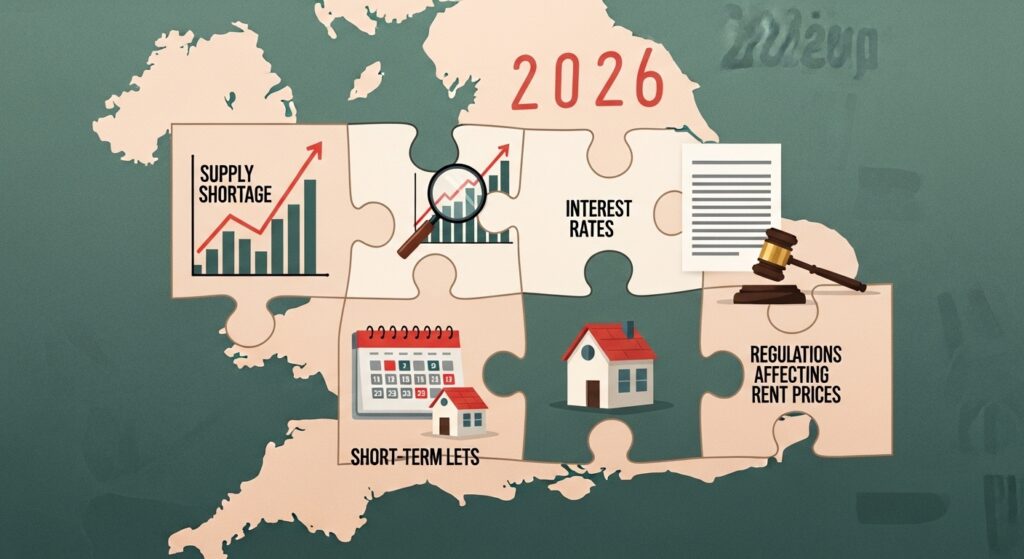
Before we blame landlords (though, let’s be honest, some deserve it), let’s understand the systemic issues:
1. Supply Crisis
- UK needs 430,000 new homes/year to meet demand
- We’re building 210,000/year (less than half)
- Shortfall: 220,000 homes annually
- Result: Competition drives prices up
2. Interest Rate Impact
- Bank of England base rate: 5.25% (2026)
- Landlord mortgage rates: 6.5-7.5%
- Landlords passing costs to tenants: +£150-250/month
3. Short-Term Lets (Airbnb Effect)
- 125,000 UK properties on Airbnb
- London: 48,000 properties (7% of rental stock)
- Landlords make 3x more on Airbnb than long-term lets
- Result: Fewer properties available = higher rents
4. Population Growth
- Net migration: +745,000 (2025)
- Internal migration: Young people moving to cities
- Household formation: 250,000 new households/year
- Housing stock growth: 180,000/year
- Gap: 70,000 homes/year
5. Regulatory Costs
- New safety regulations: £1,200/property
- Energy efficiency requirements (EPC C by 2028): £8,000-15,000/property
- Licensing fees: £500-1,500/property
- Landlords passing these costs on: +£50-100/month
6. Buy-to-Let Exodus
- 250,000 landlords sold up (2020-2026)
- Reasons: Tax changes, regulations, interest rates
- Fewer landlords = less competition = higher rents
- Paradox: Regulations meant to help tenants made rents MORE expensive
The 50% Salary Trap: What Happens When Rent Eats Everything?
When rent takes 50%+ of your income, here’s what breaks:
1. You Can’t Save for a Deposit
- Average UK house deposit (15%): £42,000
- If you pay 50% rent, saving £200/month: 17.5 years to save deposit
- By then, house prices will have increased again
- Result: Stuck renting forever
2. No Emergency Fund
- Recommended emergency fund: 3-6 months expenses
- Average monthly expenses (rent included): £1,800
- Emergency fund needed: £5,400-£10,800
- If you’re spending 50% on rent: Impossible to build
- Result: One unexpected bill = crisis
3. Mental Health Crisis
- 68% of high-rent renters report constant financial stress
- 42% report anxiety or depression linked to housing costs
- 31% have skipped meals to pay rent
- Result: Physical and mental health deterioration
4. Delayed Life Milestones
- Average age of first-time buyer: 34 (up from 27 in 2000)
- Average age of marriage: 32 (up from 26)
- Average age of first child: 31 (up from 27)
- Result: “Generation Rent” becomes “Generation Never”
5. The Pension Gap
- If you’re spending 50% on rent, you’re probably not contributing to pension
- Compound interest loss: £500/month for 40 years at 7% = £1.2 MILLION
- Result: Working until 75+ or poverty in old age
7 Ways to Escape the UK Rent Trap (Tested in 2026)
Okay, enough doom and gloom. Here’s how to actually fix this:
1. House Sharing (Save 40-60%)
The Math:
- 1-bed flat in Manchester: £1,100/month
- Room in 4-bed house share: £550/month
- Savings: £550/month = £6,600/year
Real Example: James, 28, Manchester: “I moved from a studio (£950) to a house share (£475). I saved £5,700 in one year and put it toward my ISA. Yes, I share a bathroom. No, I don’t care.”
Best For: Singles under 35, anyone prioritizing savings over privacy
2. Move to Emerging Areas (Save 15-25%)
The Strategy: Don’t move to the trendy area. Move to the area that WILL be trendy in 2 years.
Examples:
- Instead of Shoreditch (£2,100) → Walthamstow (£1,450) = Save £650/month
- Instead of Northern Quarter (£1,200) → Ancoats (£950) = Save £250/month
- Instead of Leith (£1,100) → Portobello (£850) = Save £250/month
How to Find Them:
- Look for areas with new transport links (HS2, Elizabeth Line extensions)
- Check council regeneration plans
- Look for “up-and-coming” mentions in local news
3. Negotiate Your Rent (Works 34% of the Time)
Yes, You Can Negotiate: A 2025 survey found 34% of tenants successfully negotiated rent.
Script:
“Hi [Landlord/Agent], I’ve been a reliable tenant for [X months/years], always paying on time and maintaining the property. Given the current market and my tenancy history, would you consider [freezing rent at current rate / reducing by £50/month]? I’d be happy to sign a longer tenancy agreement in exchange.”
When It Works:
- Property has been empty for 2+ weeks
- You’re a good tenant (references matter)
- Market is softening (check Rightmove for similar properties)
- You offer something (longer tenancy, upfront payment)
Success Rate: 34% overall, 52% if property vacant 2+ weeks
4. Become a Lodger (Rent-Free + Income)
The “Rent a Room” Scheme:
- Rent out a spare room in YOUR rental (with landlord permission)
- Earn up to £7,500/year tax-free
- Use that to offset YOUR rent
Example:
- Your rent: £1,200/month
- Lodger pays: £600/month
- Your effective rent: £600/month (50% reduction)
Requirements:
- Landlord permission (get it in writing)
- Spare room (obviously)
- Willingness to share living space
5. Property Guardianship (70% Cheaper)
What Is It? Guard vacant commercial/residential properties (schools, hospitals, empty offices) to prevent squatting.
The Deal:
- Pay £300-500/month (vs. £1,200+ market rent)
- Live in unusual spaces (old schools, hospitals, fire stations)
- Give 28 days notice (flexible but unstable)
Companies:
- Dot Dot Dot Property
- Camelot Guardian Management
- Guardians of London
Best For: Adventurous singles, remote workers, anyone prioritizing savings over stability
Real Example: Maya, 26, London: “I live in a converted Victorian school in Hackney. I pay £450/month (market rent would be £1,800). Yes, it’s weird. No, I don’t care. I’m saving £16,200/year.”
6. Remote Work Relocation (Move North/South Wales)
The Strategy: If your job is remote, move where rent is 50-60% cheaper.
Comparison:
| Location | Avg Rent | Annual Savings vs. London |
|---|---|---|
| London | £2,100 | – |
| Manchester | £1,100 | £12,000 |
| Leeds | £850 | £15,000 |
| Liverpool | £750 | £16,200 |
| Cardiff | £800 | £15,600 |
| Swansea | £600 | £18,000 |
Considerations:
- Job market (can you find work if remote ends?)
- Social life (friends/family proximity)
- Quality of life (culture, amenities, transport)
Best For: Remote workers, digital nomads, anyone with location flexibility
7. Co-Living Spaces (All-Inclusive, Often Cheaper)
What Is It? Purpose-built shared living with private bedrooms, shared kitchens/lounges, all bills included.
Examples:
- The Collective (London)
- Gravity Co-Living (Manchester, Leeds)
- Quarters (London, Bristol)
Pricing:
- London: £1,200-1,800/month (ALL inclusive)
- Manchester: £700-950/month (ALL inclusive)
- Traditional rent + bills: Often MORE expensive
Benefits:
- All bills included (no surprise costs)
- Furnished (no upfront furniture costs)
- Flexible contracts (3-12 months)
- Built-in community
- Often cheaper than 1-bed flat
Best For: Young professionals, newcomers to cities, anyone wanting flexibility
The “Rent Hacking” Strategy: Legal Ways to Pay Less
Beyond the big strategies, here are smaller hacks that add up:
1. Council Tax Reduction
Who Qualifies:
- Students: 100% exemption
- Single person: 25% discount
- Low income: Up to 100% reduction (varies by council)
- Students + non-students: 25-50% discount
How Much:
- Band A (London): £1,200/year = 25% = £300 savings
- Band D (National avg): £2,100/year = 25% = £525 savings
Action: Check your council’s website TODAY
2. Universal Credit Housing Element
Who Qualifies:
- Low income (<£16,000 savings)
- Unemployed or working <16 hours/week
- Renting privately or from council
How Much:
- Covers “Local Housing Allowance” rate for your area
- 1-bed flat: £400-800/month (varies by location)
Warning:
- Can be slow to process (6-8 weeks)
- Some landlords refuse UC tenants
- You may still have shortfall
3. Discretionary Housing Payments (DHP)
What Is It: Emergency council fund if you’re struggling with rent.
Who Qualifies:
- Already receiving Housing Benefit or UC housing element
- Still can’t afford rent
- Facing eviction
How Much:
- Varies by council
- Usually short-term (13-26 weeks)
- Can cover rent shortfall or deposit
Action: Contact your council’s housing benefits department
4. Rent Deposit Schemes
The Problem: Moving costs: Deposit (5 weeks rent) + first month = £6,000-8,000 in London
The Solution: Council-backed rent deposit schemes:
- Council acts as guarantor
- You pay deposit over time (interest-free)
- Or council provides bond instead of cash
Available In:
- Most London boroughs
- Manchester, Birmingham, Bristol, Leeds
- Check your council website
5. Employer Housing Allowance
Does Your Company Offer:
- Relocation allowance (£1,000-5,000)
- Housing stipend (£100-300/month)
- Interest-free loans for deposits
How to Negotiate:
“Given the cost of living in [city], would the company consider a housing allowance or relocation support? This would help me relocate and commit long-term to the role.”
Success Rate: Higher for in-demand roles, graduate schemes, senior positions
Should You Move Out of London? (City Comparison)
Let’s do the brutal math:
Financial Comparison:
| City | Avg Rent | Avg Salary | Rent as % Salary | Annual Savings vs. London |
|---|---|---|---|---|
| London | £2,100 | £48,000 | 52% | – |
| Manchester | £1,100 | £31,200 | 42% | £12,000 |
| Leeds | £850 | £28,800 | 35% | £15,000 |
| Liverpool | £750 | £27,600 | 33% | £16,200 |
| Cardiff | £800 | £29,400 | 33% | £15,600 |
| Bristol | £1,150 | £33,600 | 41% | £11,400 |
| Edinburgh | £1,200 | £32,400 | 44% | £10,800 |
| Glasgow | £700 | £28,200 | 30% | £16,800 |
Quality of Life Comparison:
| Factor | London | Manchester | Leeds | Glasgow |
|---|---|---|---|---|
| Culture | World-class | Excellent | Good | Very Good |
| Nightlife | Best in UK | Excellent | Good | Excellent |
| Transport | Best (but expensive) | Good | Good | Good |
| Job Market | Best | Very Good | Good | Moderate |
| Green Spaces | Good | Very Good | Good | Excellent |
| Friendliness | Poor | Excellent | Very Good | Excellent |
| Overall Happiness | 6.2/10 | 7.8/10 | 7.6/10 | 8.1/10 |
The Verdict:
Move to Manchester if:
- You work in tech, media, or finance
- You want city life without London prices
- You value culture and nightlife
Move to Leeds if:
- You work in finance, legal, or professional services
- You want affordability + career growth
- You prefer smaller city feel
Move to Glasgow if:
- You want MAXIMUM savings (£16,800/year)
- You value friendliness and community
- You’re okay with smaller job market
Stay in London if:
- You earn £60,000+ (rent burden <40%)
- Your career REQUIRES London (certain finance/creative roles)
- You value diversity and opportunity above all
Renting vs. Buying: Which Is Actually Cheaper in 2026?
The age-old question. Let’s crunch 2026 numbers:
Scenario: 2-Bed Property in Manchester
RENTING:
- Monthly rent: £1,100
- Annual cost: £13,200
- 5-year cost: £66,000
- You own: £0
BUYING:
- Property price: £280,000
- Deposit (15%): £42,000
- Mortgage (85%, 25 years, 6%): £1,528/month
- Monthly cost: £1,528
- Annual cost: £18,336
- 5-year cost: £91,680
- You own: ~£50,000 equity (deposit + principal paid)
The Break-Even:
- Buying costs more monthly (£428/month extra)
- But you build equity
- Break-even point: 7-9 years
When Renting Is Smarter:
✅ You’ll move within 5 years ✅ You don’t have 15% deposit ✅ Job security is uncertain ✅ Market is at peak (prices might fall)
When Buying Is Smarter:
✅ You’ll stay 7+ years ✅ You have 15-20% deposit ✅ Stable income ✅ You want control (renovate, pets, etc.)
The “Rent Vesting” Strategy:
What Is It? Rent where you LIVE (expensive city), buy where you INVEST (cheaper area).
Example:
- Live in London: Rent 1-bed for £2,100/month
- Buy in Liverpool: 2-bed for £150,000
- Deposit: £22,500 (15%)
- Mortgage: £815/month
- Rent it out: £750/month
- Shortfall: £65/month
Benefits:
- Get on property ladder
- Build equity
- Live where you want
- Tenant covers most mortgage
Risks:
- You’re still paying £2,100 rent
- Landlord responsibilities
- Interest rate risk
- Property value risk
Government Support: What Help Is Actually Available?
1. Shared Ownership
What Is It: Buy 25-75% of a property, pay rent on the rest.
Example:
- Property: £300,000
- Buy 50%: £150,000
- Deposit (10%): £15,000
- Mortgage: £135,000 = £730/month
- Rent on other 50%: £450/month
- Total: £1,180/month
Eligibility:
- Household income <£80,000 (£90,000 in London)
- First-time buyer OR used to own
- Can’t afford full property
Where:
- England: Help to Buy website
- Scotland: LIFT scheme
- Wales: Help to Buy Wales
2. First Homes Scheme
What Is It: 30-50% discount on new-build homes.
Example:
- Market price: £300,000
- 30% discount: £210,000
- Savings: £90,000
Eligibility:
- First-time buyer
- Household income <£80,000 (£90,000 London)
- Local connection (varies by area)
- Priority: Key workers, armed forces
3. Lifetime ISA (LISA)
What Is It: Government adds £1 for every £4 you save (25% bonus).
The Math:
- Save: £4,000/year (max)
- Government bonus: £1,000/year
- Over 5 years: £20,000 saved + £5,000 bonus = £25,000
Eligibility:
- Age 18-39 to open
- Use for first home (£450,000 max)
- Or withdraw at 60 (retirement)
Warning:
- Withdraw for other reasons: 25% penalty
- Only use if sure it’s for home/retirement
4. Mortgage Guarantee Scheme
What Is It: Government guarantees 95% mortgages (only 5% deposit needed).
Benefits:
- Deposit: £10,000 (vs. £30,000 for 15%)
- Get on ladder faster
Risks:
- Higher interest rates (0.5-1% more)
- Negative equity risk if prices fall
- Monthly payments higher
5. Council Housing / Housing Association
Reality Check:
- Waiting list: 1.2 million households in England
- Average wait: 5-10 years (varies by area)
- London wait: 10-15 years
Should You Apply? Yes, if:
- Income <£30,000
- Vulnerable (health issues, domestic violence)
- Homeless or at risk
How:
- Apply through your council’s housing register
- Update application regularly
- Bid on properties when available
Your Action Plan: Reduce Rent Burden by 20% This Year
Ready to escape? Here’s your roadmap:
Week 1: Audit Your Situation
Day 1-2:
- Calculate rent-to-income ratio
- List all housing costs (rent, bills, council tax, insurance)
- Check your tenancy agreement (notice period, break clause)
Day 3-4:
- Research market rates (Rightmove, Zoopla, SpareRoom)
- Identify 3 cheaper alternatives (areas, house shares, co-living)
- Calculate potential savings
Day 5-7:
- Check eligibility for support (council tax reduction, UC, DHP)
- Contact council about schemes
- Start savings plan
Week 2: Explore Options
Option A: Negotiate
- Draft negotiation email/script
- Gather evidence (similar properties, your payment history)
- Contact landlord/agent
Option B: Move
- View 3-5 properties
- Calculate moving costs (deposit, agency fees, removals)
- Give notice (if found better option)
Option C: House Share/Lodger
- List spare room (if applicable)
- Browse SpareRoom for shares
- Calculate savings
Week 3: Execute
- Make decision
- Sign new agreement OR negotiate current
- Set up automatic savings (what you save from rent reduction)
- Update budget
Week 4: Optimize
- Apply for council tax reduction
- Switch to cheaper bills (use comparison sites)
- Set up standing order to savings
- Review in 3 months
Your Goal:
Reduce rent burden from 43% to 30%
Example:
- Current: £1,100 rent on £2,500 income = 44%
- Target: £750 rent on £2,500 income = 30%
- Savings: £350/month = £4,200/year
What To Do With Savings:
- 50% to emergency fund
- 30% to deposit savings
- 20% to quality of life (guilt-free spending)
Frequently Asked Questions
Q: Is it legal for landlords to charge 50%+ of salary?
A: Yes, there’s no legal cap on rent as percentage of income. The 30% “affordable rent” guideline is just that – a guideline, not law. Some campaigners are pushing for rent controls, but nothing is implemented UK-wide yet.
Q: Can I get help if I’m already behind on rent?
A: Yes, immediately:
- Contact your council about Discretionary Housing Payments
- Speak to your landlord (they may accept payment plan)
- Contact StepChange or Citizens Advice for debt advice
- Apply for Universal Credit if eligible Don’t wait – eviction process starts after 2 months arrears.
Q: Will moving to a cheaper area hurt my career?
A: Depends on your industry:
- Tech/Media/Creative: London/Manchester/Bristol best
- Finance: London/Edinburgh/Leeds
- Professional Services: Most major cities fine
- Remote work: Location doesn’t matter Research job market BEFORE moving. Use LinkedIn to see where jobs are.
Q: Is property guardianship safe?
A: Generally yes, but:
- Check company reviews (Google, Trustpilot)
- Read contract carefully (notice periods, rules)
- Visit property first
- Meet other guardians
- Have backup plan (28 days notice means you could be homeless quickly) Best for: Adventurous, flexible, savings-focused people.
Q: Can I negotiate rent if I’m already in the property?
A: Yes, especially if:
- You’ve been a good tenant (paid on time, maintained property)
- Market rents have fallen (check Rightmove)
- Property has been hard to let
- You offer something (longer tenancy, upfront payment) Success rate: 34% overall, higher if you have leverage.
Q: Should I use a letting agent or go direct?
A: Letting Agent:
- Pros: More properties, professional process, deposit protection
- Cons: Fees (though tenant fees banned in England/Wales), less flexible
Direct from Landlord:
- Pros: Potentially cheaper, more flexible, faster
- Cons: Less protection, harder to find, variable quality
Verdict: Use agents for search, but ask if landlord would consider direct deal.
Q: What if I can’t afford ANY rent in my city?
A: Options:
- Emergency housing: Contact council if homeless/at risk
- Hostels/temporary accommodation: Short-term while you sort
- Move in with family/friends: Swallow pride, save money
- Relocate: Move somewhere affordable, remote work
- Increase income: Second job, side hustle, overtime This is a crisis – treat it like one. Take drastic action if needed.
🎯 Conclusion: You’re Not Powerless
The UK rent trap is real. It’s brutal. It’s unfair.
But you’re not powerless.
Yes, the system is broken. Yes, rents are insane. Yes, it feels impossible.
But thousands of people ARE escaping:
- By house sharing and saving £6,000/year
- By moving cities and saving £15,000/year
- By negotiating and saving £600/year
- By property guardianship and saving £16,200/year
Your action steps TODAY:
- Calculate your rent-to-income ratio
- Research ONE alternative (house share, cheaper area, co-living)
- Take ONE action (email landlord, view property, apply for council tax reduction)
The rent trap only works if you do nothing.
Break free.
📢 Share Your Story!
Are you stuck in the UK rent trap? How much of your salary goes to rent? Share your story in the comments below or tag us on social media with #UKRentTrap. We feature the most inspiring escape stories every month – and the best tip gets a £50 Amazon voucher!
Disclaimer: This article is for educational purposes only and does not constitute financial or legal advice. Individual circumstances vary. Always seek professional advice before making housing decisions. Rent prices and salaries are averages and vary by location and individual situation. Data sourced from ONS, Rightmove, Zoopla, and Office for National Statistics (2026).